A Practical Perspective for Investors and Advisors
EB-5 investors make substantial commitments by investing capital in a U.S. business or real estate project to secure their visas. They pursue permanent residency while making private investments that carry the same risks as other investments in non-public opportunities.
Most investors appreciate that business conditions can change. Construction costs can increase, financing markets can tighten, interest rates can rise, and operating assumptions can, sometimes, radically change. Even experienced sponsors and well-planned projects can face unexpected challenges.
When an EB-5 project experiences financial distress, however infrequent, investors need answers to two separate but related questions.
The first is an immigration question: How might the project’s difficulties adversely affect the investor’s EB-5 eligibility, required filings, and compliance with U.S. Citizenship and Immigration Services (USCIS) requirements?
The second pertains to their investment: What value remains? Where does the investment sit within the capital structure? What steps may preserve or recover value?
Answering these questions requires expertise from different disciplines.
Bernard P. Wolfsdorf, former president of the American Immigration Lawyers Association (AILA), has emphasized this distinction in discussing EB-5 due diligence. He encourages immigration attorneys to focus on compliance with USCIS procedures and involve qualified financial professionals when clients need investment analysis. “Don’t give investment advice unless qualified.” ¹
Wolfsdorf and Joseph M. Barnett expressed a similar viewpoint in Troubled Regional Centers and Failing EB-5 Projects: “Cautious immigrant investors are wise to seek assistance from a range of financial and tax advisors, broker-dealers, and immigration attorneys to conduct due diligence before making an EB-5 investment.” ² That consideration becomes important if an investment later faces financial difficulty.
Evaluating the Situation
Because a project is being restructured does not necessarily mean it has lost all value. A real estate development may have permits, have completed some improvements, have secured development rights, or still own land. An operating company may have valuable receivables and contracts, marketable equipment and intellectual property rights, or ongoing customer relationships.
The key question is what value remains and whether that can support a restructuring, refinancing, sale, or other solution that preserves some or all of the investors’ stake.
A financial professional can help evaluate the project’s assets, obligations, capital structure, and potential restructuring alternatives. That analysis can help investors distinguish between a temporary setback and a situation in which recovery options are limited or nonexistent.
In cases where a project retains value, one might expect that the EB-5 process can run its course, resulting in an awarded green card. On the other hand, investors may not see a return of their investment at all; in this case, they will need to secure a new EB-5-appropriate vehicle to gain permanent residence.
Those principles become clearer when examining projects that have encountered financial distress. The outcome often depends not only on the quality of the original business plan, but also on how the investment was structured and where investors stand in the pecking order when circumstances change.
Why Capital Structure Matters
The Oceanwide Plaza in downtown Los Angeles illustrates why investment structure matters when an EB-5 project runs into problems.
The developer, Oceanwide Holdings, acquired the site in 2014 and began construction in 2015 on a mixed-use development that included luxury residences, a hotel, and retail space. Approximately 200 EB-5 investors contributed an estimated $140 million to $150 million through the project’s EB-5 lending structure. ³
Construction stopped in 2019 after the developer faced obstacles, including changing market conditions, rising construction costs, and restrictions affecting Chinese outbound investment. The project later filed for bankruptcy protection, where the court has overseen the sale process and competing creditor claims. ⁴ Public reports also indicate that the project’s inability to complete construction and demonstrate required job creation caused immigration trials for some investors. ⁶
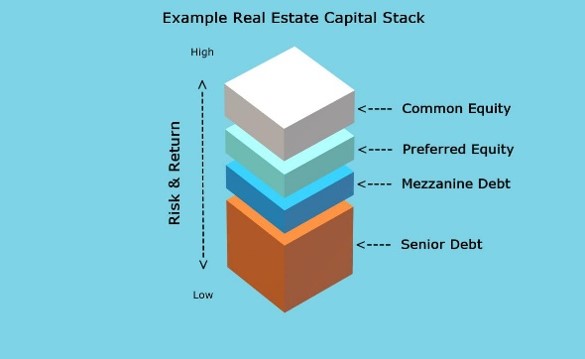 In 2025, a California Superior Court ruling confirmed that the EB-5 lending entity held priority over competing mechanic’s lien claims, strengthening the investors’ senior position within the capital structure. A proposed $470 million sale in 2026 created additional recovery prospects for investors. Although the final recovery remains subject to the debtor’s approved exit plan, the situation shows why the investors’ position in the capital stack can materially affect outcomes when a project gets into trouble. ⁴ ⁵
Preserving Investor Options
Path America illustrates how a distressed EB-5 project can sustain investor choices through a structured resolution process.
After a federal receivership was established, the court approved a restructuring plan that enabled certain EB-5 investors with funds remaining in escrow to choose whether to recover their money or release them to the project.⁷
The case did not guarantee either financial recovery or investment visa approval. However, it did reveal that courts and financial professionals can help preserve opportunities for investors while a troubled project is being rehabilitated.
What Happens to the Green Card?
A project’s difficulties do not automatically end a visa applicant’s opportunity to obtain permanent residency. The available alternatives depend on when the problems in the lifecycle of the project arise and where the investor is in the EB-5 administrative process.
Investors with pending Form I-526E petitions, conditional permanent residents, and investors preparing Form I-829 filings may face different factors. Immigration counsel can advise whether the project has satisfied job creation requirements, where investors’ filings stand, and what choices current USCIS policy may offer.
The EB-5 Reform and Integrity Act of 2022 and USCIS guidance provide certain protections, including priority date retention in qualifying circumstances. Depending on the facts, some investors may be able to retain their original priority date or pursue another qualifying EB-5 investment without beginning the process again. ⁸
Also, USCIS requires EB-5 capital to remain at risk. Investors cannot receive a guaranteed return of capital. ⁹ That requirement makes careful due diligence important not only before investing, but when evaluating any replacement investment as well.
Because every situation is different, investors should consult experienced immigration counsel promptly when a project encounters problems. They protect their clients’ interests by interpreting USCIS requirements and identifying available legal pathways for the best result. At the same time, financial professionals evaluate the investment itself, assess potential recovery strategies, and analyze alternatives that may be available.
Sources
- Bernard P. Wolfsdorf, “Direct EB-5 Due Diligence: Buyer Beware and Immigration Attorneys Be Cautious,” Wolfsdorf Rosenthal LLP.
- Bernard P. Wolfsdorf and Joseph M. Barnett, “Troubled Regional Centers and Failing EB-5 Projects,” EB5 Investors Magazine, November 30, 2016
- EB5 Investors, “Senior Debt Status Shields EB-5 Investors in $470M Oceanwide Bid.”
- Yahoo Finance, “Bankruptcy Plan Filed to Pave Way for Sale of Oceanwide Plaza, Downtown Los Angeles Graffiti Towers,” February 2026.
- Courthouse News Service, “Foreign Investors Beat Challenge to Their Priority in Stalled, $1.8 Billion Downtown LA Project,” April 23, 2025.
- EB5 Investors, “Senior Debt Status Shields EB-5 Investors in $470M Oceanwide Bid.”
- SEC v. Path America, LLC, No. 2:15-cv-01350 (W.D. Wash.), Order Approving Receiver’s Proposed Transaction and Investor Procedures.
- U.S. Citizenship and Immigration Services, Policy Manual, Volume 6, Part G: Investors (EB-5).
- U.S. Citizenship and Immigration Services, Policy Manual, Volume 6, Part G, Chapter 2: Eligibility Requirements.